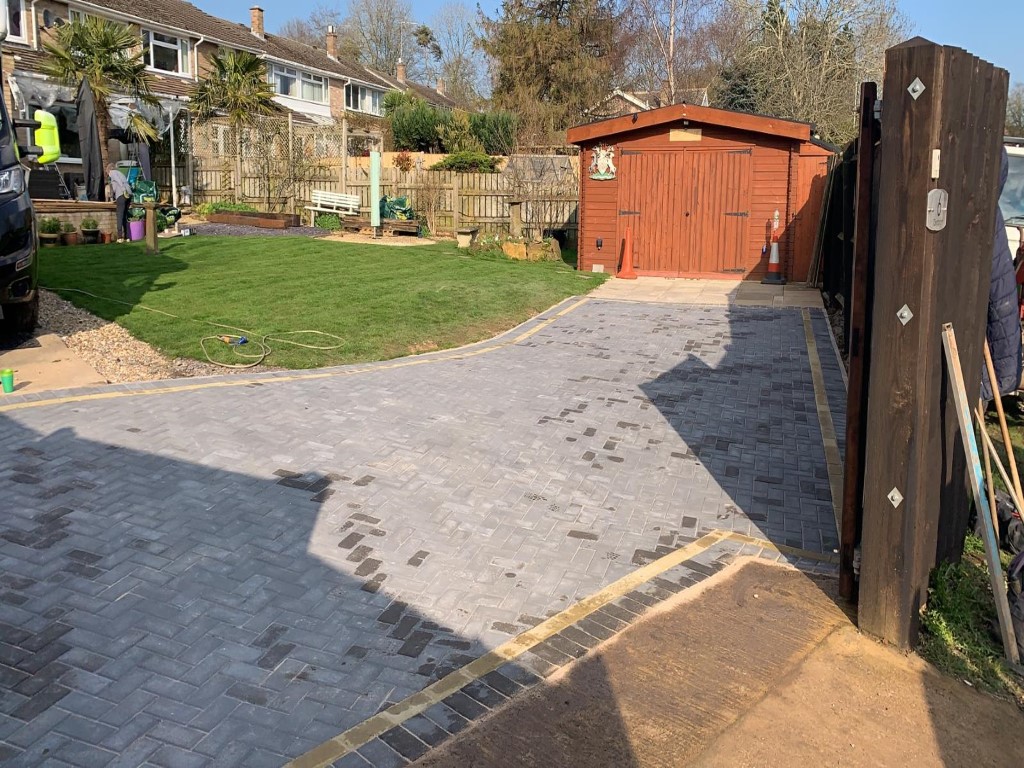

Edge restraints form the critical backbone of any block paving installation, yet many Leicester homeowners overlook their importance until problems emerge. After decades installing driveways across Leicestershire, I’ve seen countless failed installations traced back to inadequate edge support.
Without proper restraints, your block paving will gradually spread outwards under traffic loads. The blocks lose their tight interlocking pattern, creating gaps where weeds flourish and individual blocks become loose or sink.
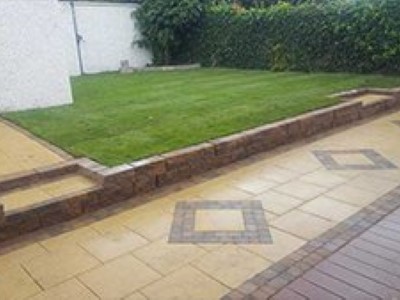
Types of Edge Restraint for Installations
Proper edge restraint prevents block movement and maintains structural integrity. When driveway contractors install edging systems, they typically choose between concrete haunching, steel edging, or plastic restraints based on traffic loads and ground conditions.
Concrete kerb edging provides the strongest restraint for driveways and heavy use areas. We typically use 50mm x 150mm concrete kerbs, bedded in concrete and backfilled for maximum stability.
- Concrete kerb edging: strongest option for driveways and commercial use
- Timber edge boards: suitable for patios and light pedestrian areas
- Metal edging strips: discreet option for curved designs
- Existing walls or structures: can provide restraint when properly utilised
Installation Requirements in Leicester Clay Soils
Leicester’s heavy clay soils demand extra attention to edge restraint installation. Clay expansion and contraction puts additional stress on restraint systems throughout our wet winters and dry summers.
Concrete haunching must extend at least 100mm below the paving level in clay soils. This prevents frost heave from lifting restraints and compromises the entire installation’s integrity.
Common Edge Restraint Failures
Inadequate concrete haunching causes most edge restraint failures we encounter during repair work. Contractors sometimes skimp on concrete depth, leading to movement within months of completion.
Missing restraints at gateway openings create particular problems. The paving spreads at these vulnerable points, eventually affecting the entire area’s stability and requiring costly repairs.